
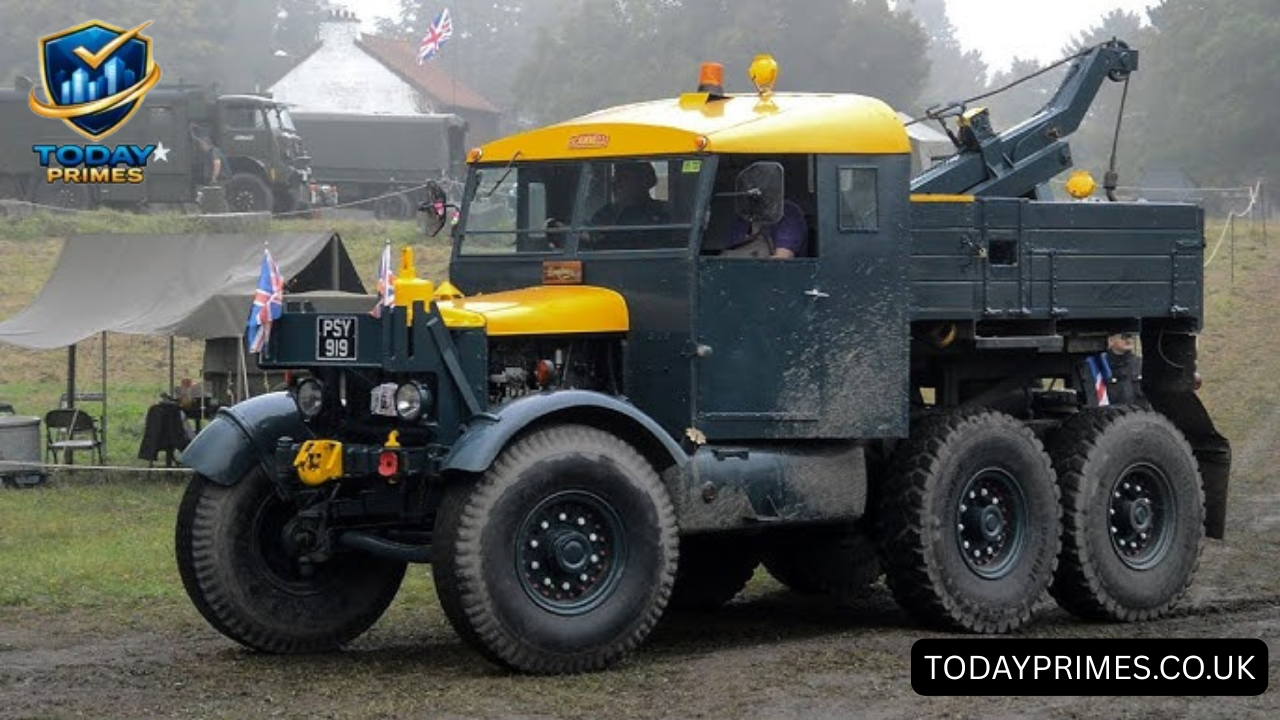
The Scammell Pioneer is remembered as one of the most capable and resilient British military vehicles of the Second World War. Designed for heavy-duty tasks, it played a crucial role in transporting artillery, recovering damaged vehicles, and moving tanks across challenging terrain. Its strong build and mechanical reliability made it an essential part of British Army logistics during wartime operations.
Even decades later, the Scammell Pioneer continues to attract attention from historians, restorers, and vehicle enthusiasts. Its distinctive appearance and engineering ingenuity reflect a period when function and durability were prioritised above comfort. This combination of purpose-driven design and historical importance has ensured its lasting legacy in military vehicle history.
Origins and Development History
The development of the Scammell Pioneer began in the interwar years, when Britain required robust vehicles for industrial and military use. Engineers focused on creating a heavy tractor capable of handling extreme loads while operating reliably on rough ground. These early design principles laid the foundation for what would become one of Britain’s most successful wartime vehicles.
As the threat of war increased, the vehicle was adapted for military service with minimal changes to its core design. This proved to be a wise decision, as the Scammell Pioneer quickly demonstrated its effectiveness under combat conditions. Its ability to perform demanding tasks with consistency made it invaluable once hostilities began.
Design, Engineering and Mechanical Features
The Scammell Pioneer was engineered with strength and simplicity in mind. Its robust chassis and advanced suspension system allowed it to operate across mud, sand, and uneven ground where lighter vehicles struggled. A powerful engine provided the torque needed for towing heavy loads, making it suitable for a wide range of military applications.
Mechanical reliability was a key advantage of the Scammell Pioneer. Components were designed for ease of maintenance, enabling crews to carry out repairs in the field with limited tools. This focus on practical engineering reduced downtime and ensured the vehicle remained operational during extended military campaigns.
Military Roles and Operational Versatility
Throughout the Second World War, the Scammell Pioneer served in several critical roles. It was commonly used as an artillery tractor, hauling large guns into firing positions that would otherwise be inaccessible. Its off-road capability allowed it to support frontline units operating in difficult environments.
Another vital role was vehicle recovery, where the Scammell Pioneer retrieved damaged or immobilised tanks and trucks from the battlefield. This function helped preserve valuable equipment and maintain operational strength. Its versatility made it one of the most relied-upon heavy vehicles in British service.
Interior Layout and Crew Experience
Inside the cab, the Scammell Pioneer reflected its utilitarian purpose. The interior was simple and functional, offering basic seating, clear instrumentation, and straightforward controls. Comfort was secondary to practicality, yet the layout allowed drivers to focus on controlling the vehicle in challenging conditions.
Operating the Scammell Pioneer required skill and concentration. Drivers needed experience to manage its size and weight, especially when towing heavy equipment. Despite this, many crews respected the vehicle for its predictable handling and dependable performance, even during long and demanding missions.
Wartime Service and Historical Significance
The Scammell Pioneer saw extensive service across multiple theatres of war, including Europe and North Africa. Its ability to function reliably under extreme conditions made it a cornerstone of British military logistics. From supply convoys to battlefield recovery, it contributed significantly to operational success.
Historically, the Scammell Pioneer represents British engineering at its most practical and resilient. It demonstrated how thoughtful design could overcome material shortages and harsh environments. This historical significance has elevated it from a utilitarian vehicle to an important symbol of wartime ingenuity.
Post-War Use, Rarity and Preservation
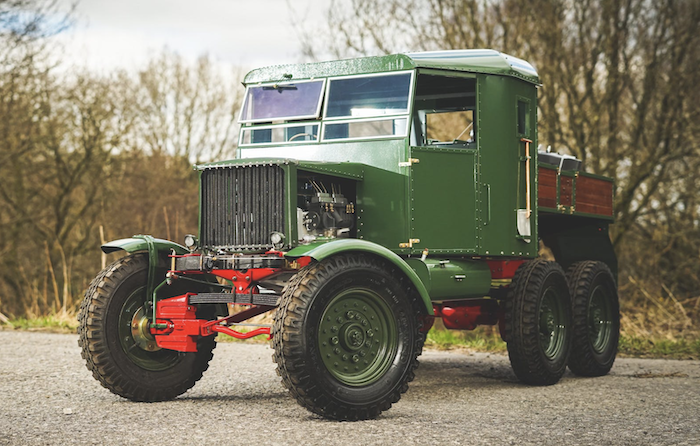
After the war, many Scammell Pioneer vehicles continued to serve in civilian roles or were adapted for industrial use. Over time, however, most examples were retired or dismantled, making surviving vehicles increasingly rare. Today, original models are highly sought after by collectors and museums.
Preservation efforts have helped ensure the Scammell Pioneer remains visible to modern audiences. Restored vehicles often appear at historical events and military shows, offering valuable insight into wartime transport. Their rarity adds to their appeal and reinforces their historical importance.
Collectability and Modern Enthusiast Interest
Interest in the Scammell Pioneer has grown steadily in recent years. Collectors value it for its historical relevance, while restorers appreciate the challenge of returning such a complex machine to working order. Finding original parts can be difficult, but successful restorations are highly rewarding.
Beyond full-sized vehicles, the Scammell Pioneer is also popular among model builders and hobbyists. Scale kits, detailed walkarounds, and radio-controlled versions allow enthusiasts to engage with its history in accessible ways. This continued interest ensures the vehicle’s story remains alive.
Conclusion: The Enduring Legacy of the Scammell Pioneer
The Scammell Pioneer stands as one of the most impressive British military vehicles ever produced. Its combination of strength, reliability, and adaptability made it indispensable during the Second World War. Few vehicles managed to perform such demanding tasks with the same level of consistency and success.
Today, the Scammell Pioneer is admired not only for its wartime service but also for what it represents. It embodies a period of engineering driven by necessity and determination. As a result, it continues to inspire respect and fascination among historians and enthusiasts alike.
Frequently Asked Questions
What was the Scammell Pioneer used for?
The Scammell Pioneer was used as an artillery tractor, recovery vehicle, and tank transporter during World War II.
Why was the Scammell Pioneer important in WW2?
It was vital because of its strength, reliability, and ability to operate on difficult terrain.
What engine did the Scammell Pioneer use?
The Scammell Pioneer was powered by a large petrol engine designed for high torque and heavy towing.
Is the Scammell Pioneer rare today?
Yes, surviving Scammell Pioneer vehicles are rare and mostly owned by museums or private collectors.
Can you still buy a Scammell Pioneer?
A Scammell Pioneer occasionally appears for sale, but availability is very limited and prices are high.
What is the Scammell Pioneer SV2S?
The SV2S was a recovery variant specifically designed for towing and repairing damaged vehicles.
Was the Scammell Pioneer difficult to drive?
Yes, driving the Scammell Pioneer required skill due to its size, weight, and heavy loads.
Are there model kits of the Scammell Pioneer?
Yes, the Scammell Pioneer is available as scale model kits and hobby replicas.
Did the Scammell Pioneer serve after the war?
Some Scammell Pioneer vehicles continued in civilian and industrial use after World War II.
Why is the Scammell Pioneer still popular today?
It remains popular due to its historical significance, engineering quality, and iconic WW2 design.
Also Read: berryfields aylesbury