
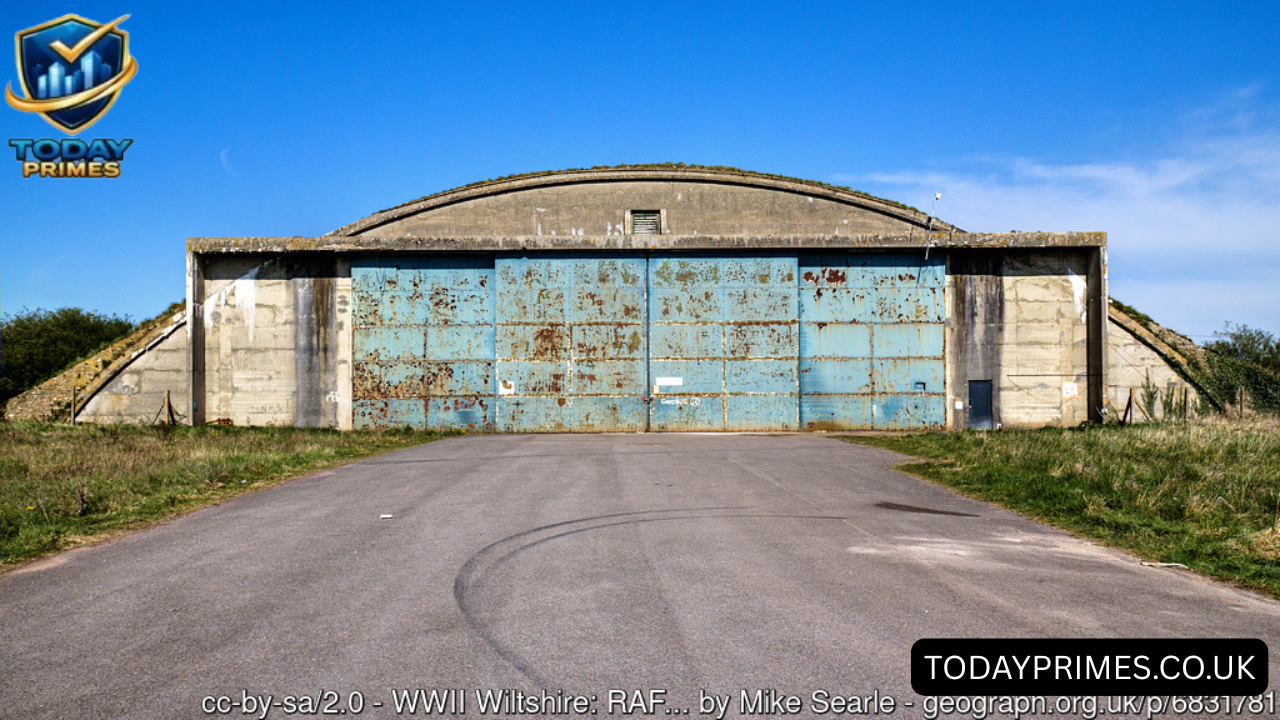
Hullavington Airfield is one of Wiltshire’s most historically significant aviation sites, located near the village of Hullavington and close to Chippenham. Known originally as RAF Hullavington, the airfield has played an important role in Britain’s military and industrial story, evolving across decades of national change.
Today, Hullavington Airfield is no longer an operational RAF base, yet it remains firmly in the public eye. Its transformation from a wartime air station into a modern technology-focused site makes it a unique example of how heritage locations can be preserved while adapting to contemporary needs.
The Early History of Hullavington Airfield
Hullavington Airfield was developed in the late 1930s as part of Britain’s rapid military expansion before the Second World War. Built to support pilot training and aircraft operations, it quickly became an active and vital Royal Air Force station. The airfield’s design reflected the needs of wartime aviation, with long runways and substantial hangar space.
During the Second World War, RAF Hullavington trained aircrews who went on to serve across multiple theatres of conflict. The site was busy, disciplined, and central to Britain’s air defence strategy. Hullavington Airfield’s contribution during this period cemented its place in RAF history and local memory.
Post-War Role and Changing Military Needs
After the war, Hullavington Airfield continued to serve the RAF, although its role gradually changed. Advances in aircraft technology and new strategic priorities meant that some airfields became less essential. Training requirements shifted, and larger or more modern bases began to take precedence within the RAF network.
Despite these changes, Hullavington Airfield remained active for several decades. Its facilities were adapted for different military purposes, including technical training and support roles. However, by the late twentieth century, it became clear that the airfield’s long-term future as an RAF base was uncertain.
Closure of RAF Hullavington
RAF Hullavington officially closed as an active air station as part of wider defence cuts and restructuring. The decision reflected national changes rather than local failure, as many historic RAF sites were deemed surplus to modern military requirements. Hullavington Airfield entered a quieter phase following its closure.
The closure had a noticeable impact on the surrounding communities. While some mourned the loss of a long-standing employer and symbol of national service, others saw opportunities for redevelopment. Hullavington Airfield stood at a crossroads, balancing preservation with the need for a new purpose.
Hullavington Airfield Location and Setting
Hullavington Airfield is situated in rural Wiltshire, close to Chippenham and surrounded by a mix of villages and open countryside. Its location was ideal for military training, offering space, privacy, and access to transport routes. Today, that same setting adds to its appeal as a redevelopment site.
Searches for Hullavington Airfield maps, address, and postcode remain common, reflecting continued public interest. The scale of the site is still visible from aerial views, with runways and hangars forming a distinctive landscape that clearly marks its aviation origins.
Sale and Planning Decisions
Following years of limited use, Hullavington Airfield was eventually sold by the Ministry of Defence. The sale attracted significant attention due to the site’s size, infrastructure, and historical value. Questions around Hullavington Airfield for sale and planning permission became central to public discussion.
Local authorities faced the challenge of balancing development with conservation. Planning decisions focused on protecting historic buildings while allowing the site to support new economic activity. This careful approach ensured Hullavington Airfield could be reused without erasing its past.
Dyson and the Transformation of Hullavington Airfield
A major turning point came when Dyson acquired the site. Dyson bought Hullavington Airfield with plans to create a UK technology and research campus. This marked one of the most significant private investments in the airfield’s history.
The Dyson Hullavington Airfield redevelopment involved restoring historic hangars and adapting them for modern engineering and innovation. The project created jobs, attracted skilled workers, and gave the airfield a new national role, linking its historic infrastructure with cutting-edge technology.
Events and Alternative Uses Over Time
Before and during redevelopment, Hullavington Airfield hosted a variety of specialist activities. Its long stretches of tarmac made it suitable for automotive testing and Hullavington Airfield track day events. These uses helped maintain the site and kept it active during uncertain periods.
Although public access is now restricted, the airfield’s past as a multi-use site remains part of its story. From military training to civilian events, Hullavington Airfield has demonstrated flexibility while retaining its distinctive character.
Hullavington Airfield Today

Today, Hullavington Airfield is a secure and professionally managed site focused on technology, research, and innovation. While it no longer supports aircraft operations, the physical reminders of its RAF past remain prominent. Restored hangars and preserved layouts keep its aviation heritage visible.
Hullavington Airfield in Wiltshire now represents successful adaptive reuse. It stands as an example of how former military sites can contribute to the modern economy while respecting their historical importance and local significance.
Conclusion
Hullavington Airfield has experienced remarkable change over nearly a century. From its origins as a vital RAF training base to its closure and rebirth as a technology campus, the site reflects wider shifts in British history. Each phase has added to its identity rather than replacing it.
Today, Hullavington Airfield remains a landmark in Wiltshire. Its story shows that heritage and progress do not have to be in conflict, proving that thoughtful redevelopment can honour the past while building for the future.
Frequently Asked Questions
What is Hullavington Airfield?
Hullavington Airfield is a former RAF station in Wiltshire that has been redeveloped into a modern technology and research site.
Where is Hullavington Airfield located?
Hullavington Airfield is located near Chippenham in Wiltshire, England.
When did RAF Hullavington close?
RAF Hullavington closed in the late twentieth century as part of wider UK defence restructuring.
What was Hullavington Airfield used for during WWII?
Hullavington Airfield was mainly used for RAF pilot training and aircraft support during the Second World War.
Did Dyson buy Hullavington Airfield?
Yes, Dyson bought Hullavington Airfield to develop it into a UK technology and research campus.
What is Hullavington Airfield used for today?
Today, Hullavington Airfield is used for technology development, engineering, and research activities.
Is Hullavington Airfield open to the public?
Hullavington Airfield is not generally open to the public due to its current private and secure use.
Are track days held at Hullavington Airfield?
Hullavington Airfield previously hosted track day events, but these are now limited due to redevelopment.
What is the Hullavington Airfield postcode?
The Hullavington Airfield postcode is commonly listed as SN14 6GU.
Is Hullavington Airfield still an RAF base?
No, Hullavington Airfield is no longer an active RAF base.
Also Read: kings caple