
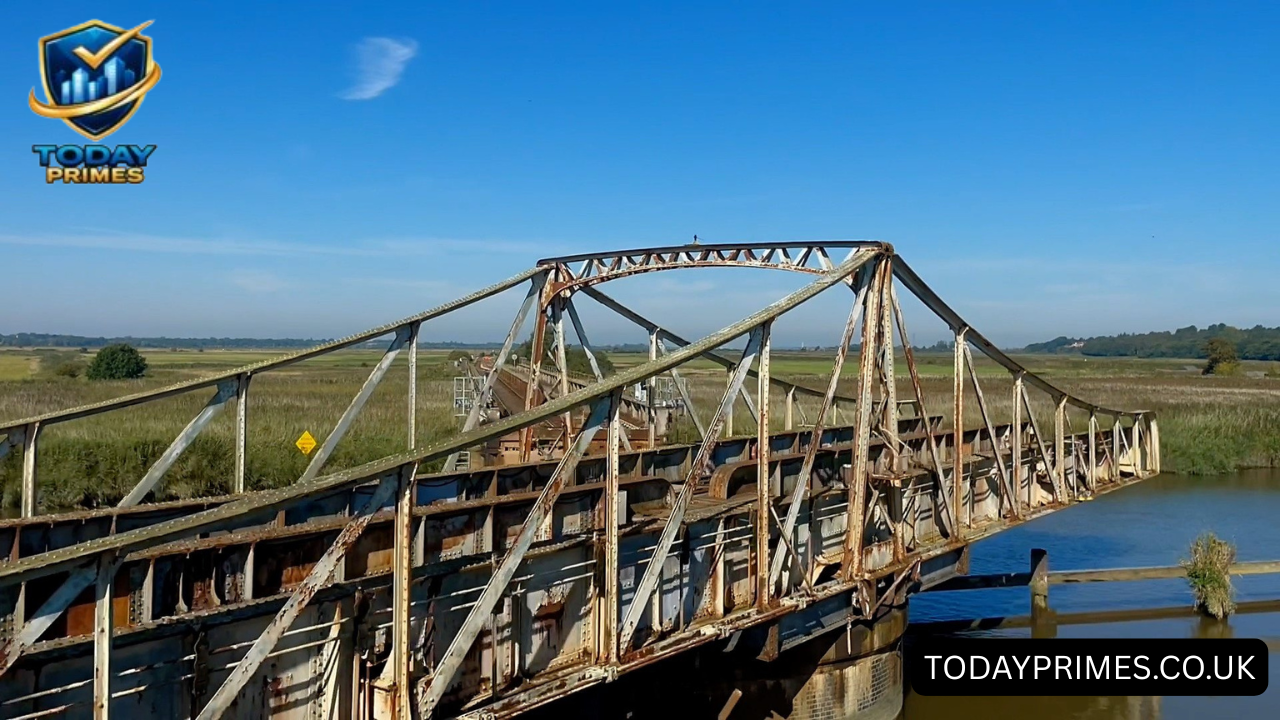
Somerleyton Swing Bridge is a rare example of a historic railway bridge that still performs its original role more than a century after it was built. Designed to carry trains while allowing river traffic to pass, it represents a thoughtful balance between land transport and water navigation. Its continued use makes it an important working structure rather than simply a heritage monument.
For locals, boaters, and railway enthusiasts, the bridge is a familiar and fascinating sight. Watching it swing open over the River Waveney offers a glimpse into traditional engineering still relevant today. This article explores its location, background, operation, and significance, providing a complete guide to understanding why this bridge remains so important.
Where Somerleyton Swing Bridge Is Located
Somerleyton Swing Bridge crosses the River Waveney close to the village of Somerleyton, sitting precisely on the boundary between Norfolk and Suffolk. The river itself forms a natural county border, and the bridge provides a crucial connection between the two sides. Its rural setting can feel quiet, yet it supports an essential transport corridor in eastern England.
The bridge carries the railway line between Norwich and Lowestoft, linking inland communities with the coast. This route is important for commuters and visitors alike. Despite its modest appearance, the bridge plays a central role in maintaining rail continuity across an area shaped by waterways and wetlands.
History of Somerleyton Swing Bridge
The current structure was completed in 1905 during a period of rapid railway expansion. It replaced an older single-track bridge that could no longer meet the demands of increasing rail traffic. Built to accommodate double tracks, the new design improved efficiency while respecting the needs of river users navigating the Waveney.
Over the decades, Somerleyton Swing Bridge has seen steam trains, diesel locomotives, and modern rail services cross its span. While signalling and safety systems have been updated, the core structure remains true to its original design. This continuity makes the bridge a living piece of transport history rather than a static relic.
How the Bridge Operates
As a swing bridge, the central section rotates horizontally to clear a navigable channel for boats. When closed, the rails align perfectly, allowing trains to cross safely. When an opening is required, rail traffic is halted and the bridge swings aside, demonstrating a carefully coordinated process.
This operation depends on communication between railway controllers and river authorities. Safety checks are carried out before every movement to protect both trains and vessels. The smooth operation of Somerleyton Swing Bridge shows how traditional mechanical design can still meet modern safety standards.
Somerleyton Swing Bridge Opening Times
There are no fixed daily opening times for Somerleyton Swing Bridge, as movements depend largely on the railway timetable. Openings are arranged when train schedules allow, which helps minimise disruption to rail services while still supporting river navigation.
For boaters, planning ahead is essential. Requests to open the bridge are usually made in advance, especially during busy periods on the Norfolk Broads. This flexible system reflects the bridge’s role as a working railway crossing rather than a purely recreational feature.
Height and Clearance Information
When closed, the bridge provides limited clearance beneath its span, allowing only lower-profile boats to pass without an opening. Clearance levels can change depending on water height, making it important for skippers to assess conditions carefully before approaching.
Gauge boards near the bridge help indicate current clearance. Understanding these markers is vital for safe navigation and avoiding unnecessary delays. Somerleyton Swing Bridge therefore requires attentiveness from river users, particularly during periods of high water or strong tidal influence.
Importance to the Norfolk Broads
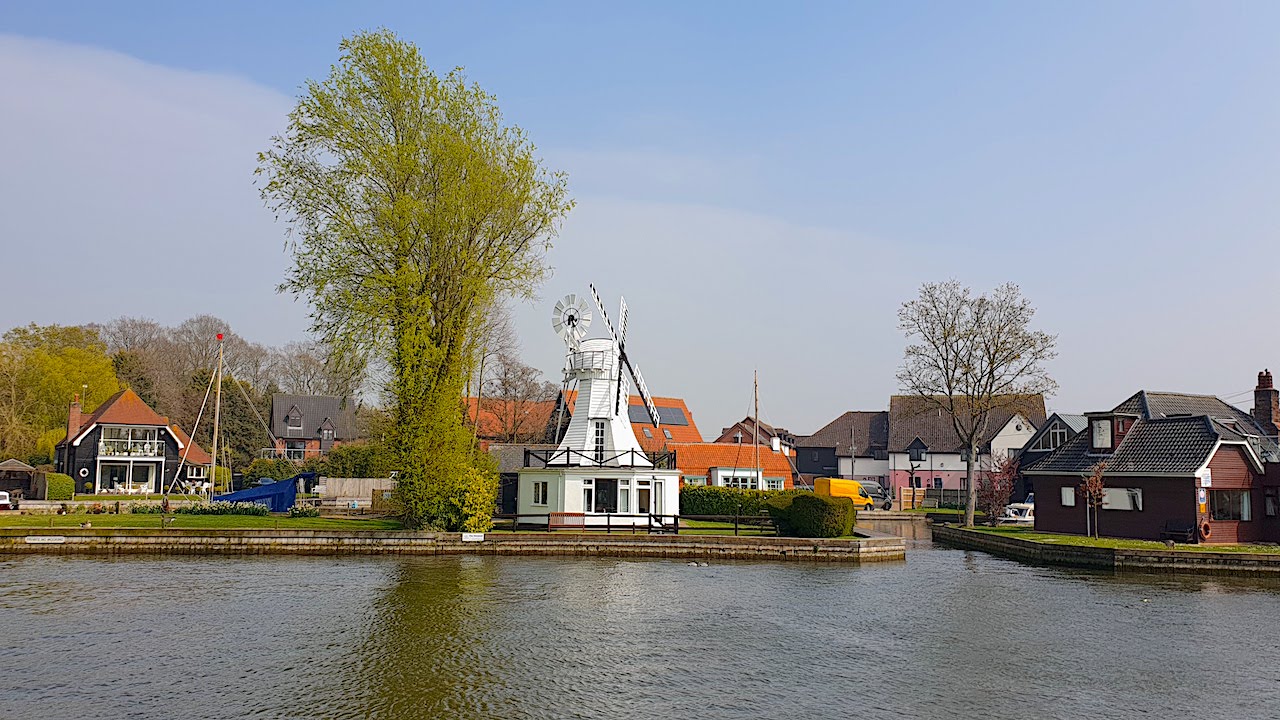
Somerleyton Swing Bridge is a key structure within the wider Norfolk Broads network, where rivers, railways, and tourism coexist closely. By allowing both trains and boats to pass, it supports local economies that rely on transport, leisure boating, and seasonal visitors.
The bridge also contributes to the character of the Broads, blending engineering heritage with natural landscapes. Its presence reminds visitors that these waterways are living routes shaped by centuries of trade, travel, and innovation rather than purely scenic backdrops.
Visiting and Viewing the Bridge
Visitors often enjoy watching the bridge in operation from nearby footpaths and riverbanks. Seeing trains pause while the span swings open for boats is an experience that highlights the careful coordination involved. The surrounding area offers peaceful views typical of the Waveney valley.
For photographers and enthusiasts, timing a visit during a bridge opening can be rewarding. While access to the structure itself is restricted for safety reasons, observing from a distance still provides an excellent appreciation of its scale and movement within the landscape.
Conclusion
More than a simple crossing, Somerleyton Swing Bridge stands as a working example of how historic infrastructure can remain relevant in a modern transport system. Its ability to serve both rail and river traffic shows thoughtful engineering that continues to meet practical needs.
As trains still pass overhead and boats glide beneath or through its open span, the bridge maintains its original purpose with quiet efficiency. Somerleyton Swing Bridge remains an essential link between counties, communities, and centuries of transport history.
Frequently Asked Questions
What is Somerleyton Swing Bridge?
Somerleyton Swing Bridge is a historic railway swing bridge crossing the River Waveney on the Norfolk–Suffolk border.
When was Somerleyton Swing Bridge built?
Somerleyton Swing Bridge was built in 1905 to carry the Norwich to Lowestoft railway line.
Does Somerleyton Swing Bridge still carry trains today?
Yes, the bridge is fully operational and continues to carry regular passenger trains.
What are Somerleyton Swing Bridge opening times?
Somerleyton Swing Bridge has no fixed opening times and opens based on train schedules and river traffic requests.
Can boats pass under Somerleyton Swing Bridge without opening?
Some low-profile boats can pass under the bridge when water levels allow, depending on clearance.
How high is the clearance at Somerleyton Swing Bridge?
The clearance varies with water levels and should always be checked using nearby gauge boards.
Who operates Somerleyton Swing Bridge?
The bridge is operated through coordination between railway authorities and river navigation managers.
Why does Somerleyton Swing Bridge swing open?
The bridge swings open to allow taller vessels to navigate along the River Waveney safely.
Is Somerleyton Swing Bridge part of the Norfolk Broads?
Yes, it is an important navigational structure within the Norfolk Broads river network.
Can visitors watch Somerleyton Swing Bridge open?
Yes, visitors can safely view the bridge opening from nearby riverbanks and footpaths.
Also Read: greens norton northamptonshire