
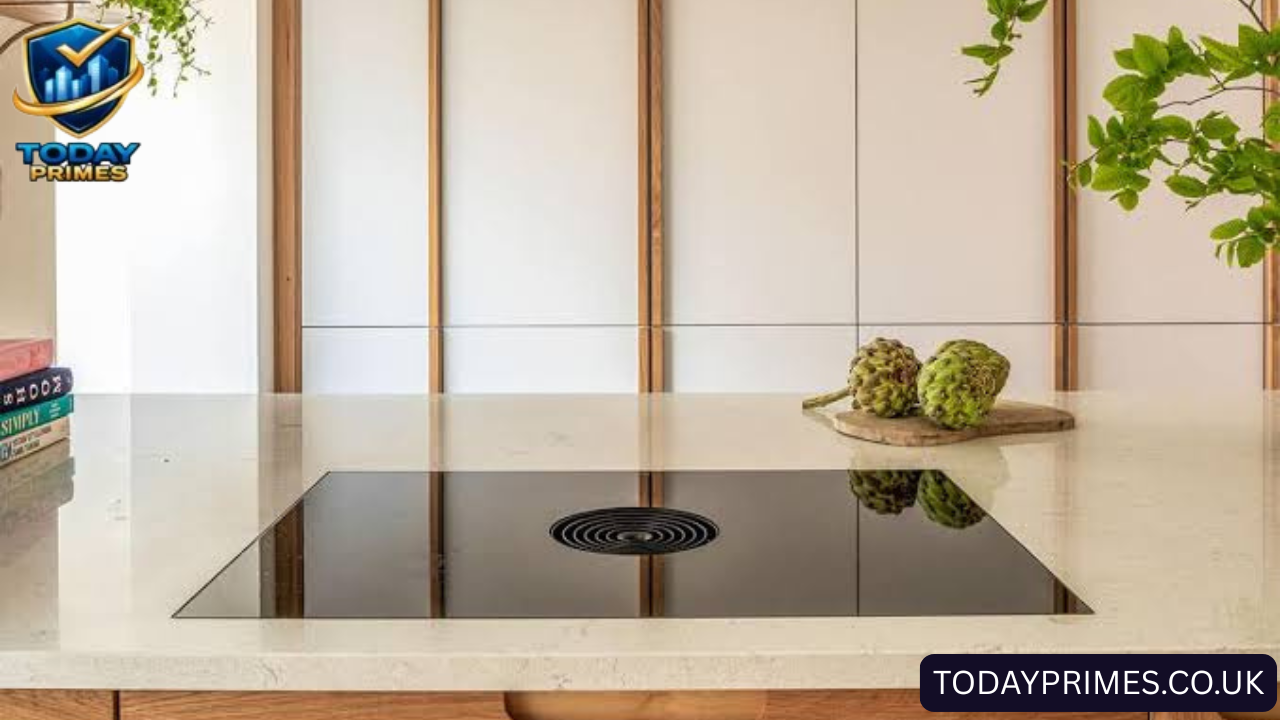
An induction hob has become one of the most popular cooking appliances in modern UK kitchens thanks to its speed, efficiency, and stylish appearance. Whether you are renovating your kitchen or replacing an older cooker, choosing the right induction hob can make everyday cooking easier and more enjoyable. With advanced technology and improved safety features, it is an excellent choice for households of all sizes.
This guide explains everything you need to know before buying an induction hob. You will learn how it works, its advantages and disadvantages, the best brands available, suitable cookware, installation advice, cleaning tips, and much more. By the end of this article, you will have the knowledge needed to choose the perfect model for your home.
What Is an Induction Hob and How Does It Work?
An induction hob is an electric cooking surface that uses electromagnetic energy to heat cookware directly instead of heating the hob itself. Beneath the smooth glass surface are induction coils that create a magnetic field when compatible cookware is placed on the cooking zone. This technology delivers heat straight to the pan, making cooking quicker and far more energy efficient than many traditional alternatives.
Unlike gas or ceramic hobs, an induction hob remains relatively cool around the cooking area because only the pan becomes hot. This makes it safer for families with children while also reducing the risk of burnt food sticking to the surface. The precise temperature control also allows cooks to simmer sauces gently or boil water rapidly with minimal effort.
Benefits and Drawbacks of an Induction Hob
One of the greatest benefits of choosing an induction hob is its outstanding cooking speed. Water boils in significantly less time compared with conventional electric hobs, while the immediate temperature response provides greater accuracy when preparing delicate recipes. Energy efficiency is another major advantage because very little heat is wasted during cooking.
There are a few factors worth considering before purchasing. Compatible magnetic cookware is essential, so some older aluminium or copper pans may need replacing. Installation requirements can also vary depending on your kitchen’s electrical system. Despite these considerations, the long-term savings, convenience, and modern features make an induction hob an excellent investment.
Types of Induction Hobs Available
Today’s market offers several styles to suit different homes and cooking needs. Standard built-in models are the most common choice for fitted kitchens, while a portable induction hob provides flexibility for students, caravans, holiday homes, or anyone needing an additional cooking surface. These compact appliances are lightweight and easy to store.
Another increasingly popular option is an induction hob with extractor, which combines cooking and ventilation into one stylish appliance. Plug in induction hob models are also available for smaller kitchens where simple installation is preferred. With various sizes including 60cm, 80cm, and 90cm models, there is a suitable option for almost every household.
Best Induction Hob Brands in the UK
Choosing a trusted manufacturer ensures reliability, excellent performance, and long-lasting quality. Bosch induction hob models are widely recognised for innovative features, quiet operation, and durable construction. Likewise, NEFF induction hob appliances offer flexible cooking zones and intuitive controls that appeal to keen home cooks.
AEG induction hob products combine premium design with advanced technology, while Beko induction hob models provide exceptional value for money. Buyers looking for luxury often choose Miele induction hob or Siemens induction hob appliances. Samsung induction hob products include smart connectivity features, and IKEA induction hob models remain popular for affordable kitchen renovations.
How to Choose the Best Induction Hob
When selecting the best induction hob, begin by considering the size of your kitchen and your usual cooking habits. Families who regularly prepare several dishes simultaneously may benefit from four or five cooking zones, while smaller households may find two-zone models perfectly adequate. Flexible cooking zones can also accommodate larger pans and roasting dishes.
Additional features can significantly improve your cooking experience. Functions such as Power Boost, automatic pan detection, child safety locks, timer controls, residual heat indicators, and touch-screen operation all add convenience. Comparing warranties, energy ratings, and customer reviews will help you make an informed purchasing decision.
Choosing the Right Induction Hob Pans
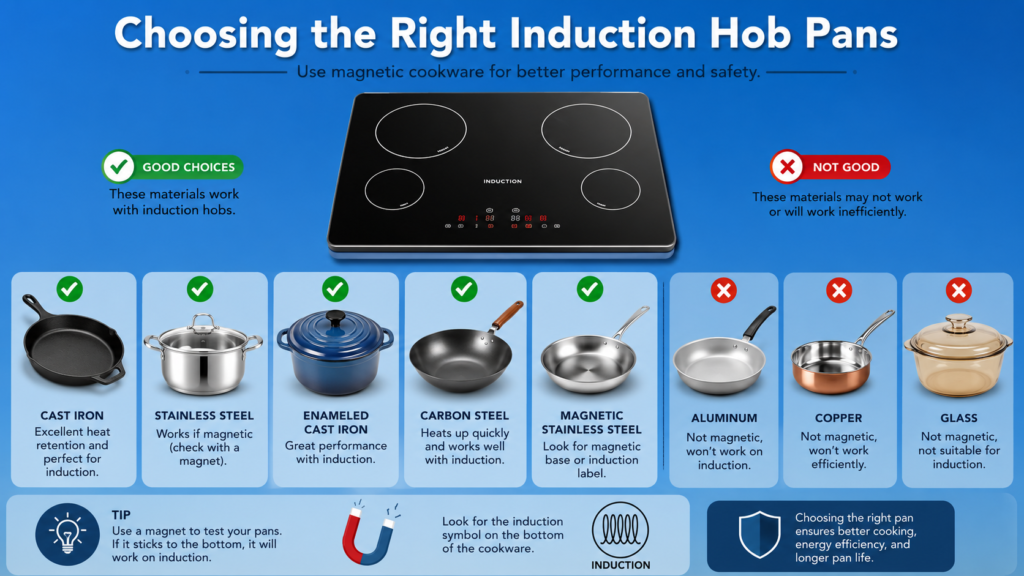
One essential part of successful induction cooking is selecting suitable cookware. Induction hob pans require a magnetic base so they can interact with the electromagnetic field generated by the appliance. Stainless steel and cast iron cookware are generally excellent choices because they distribute heat evenly and perform efficiently.
If you already own cookware, testing compatibility is simple. Place a household magnet against the bottom of each pan. If the magnet sticks firmly, the pan should work effectively on an induction hob. Investing in high-quality cookware not only improves cooking performance but also protects the cooking surface from unnecessary wear.
Best Pans for Induction Hob Cooking
The best pans for induction hob cooking combine durability, excellent heat distribution, and long-lasting performance. Stainless steel cookware remains one of the most popular choices because it heats evenly, resists corrosion, and suits everyday cooking. Many premium cookware collections are specifically designed for induction appliances.
Cast iron pans are ideal for searing meat, slow cooking, and retaining heat for extended periods. Modern non-stick induction cookware also provides excellent convenience for preparing eggs, pancakes, and delicate meals with minimal oil. Choosing quality cookware helps maximise cooking efficiency while extending the lifespan of both your pans and your appliance.
Installing an Induction Hob
Before purchasing, it is important to understand the installation requirements. Some smaller plug in induction hob models simply connect to a standard electrical socket, making them suitable for temporary kitchens or compact living spaces. Larger built-in appliances usually require dedicated electrical circuits and professional installation.
Hiring a qualified electrician ensures the appliance meets UK electrical regulations and operates safely. Proper installation also protects the manufacturer’s warranty and reduces the likelihood of future electrical issues. Spending slightly more on professional fitting often provides valuable peace of mind for many years.
Cleaning and Maintaining an Induction Hob
Keeping your cooking surface clean is surprisingly simple. Since food rarely burns onto the glass surface, most everyday spills can be removed using a soft cloth and warm soapy water after the appliance has cooled. This makes regular maintenance much quicker than cleaning traditional gas burners.
For stubborn marks, use a specialist induction hob cleaner that is designed for ceramic glass surfaces. Many homeowners also use an induction hob protector to prevent scratches during food preparation or storage. Regular cleaning not only keeps the appliance looking attractive but also helps maintain efficient cooking performance.
Running Costs and Energy Efficiency
Energy efficiency remains one of the biggest reasons people choose induction cooking. Because heat is transferred directly into the cookware, very little energy escapes into the surrounding air. This allows meals to cook faster while reducing electricity consumption compared with older electric cooking methods.
Although electricity prices continue to change across the UK, many households notice lower overall cooking costs due to improved efficiency and shorter cooking times. The reduced heat output also keeps kitchens cooler during warmer months, making cooking more comfortable throughout the year.
Common Problems and Troubleshooting
Occasionally, an induction hob may not recognise a pan. This usually occurs because the cookware is incompatible or the base diameter is too small for the selected cooking zone. Checking the pan’s magnetic properties often solves the issue immediately without requiring repairs.
Some users notice a gentle humming or buzzing noise while cooking. This is generally normal and results from the electromagnetic technology interacting with certain cookware. Using high-quality induction-compatible pans often reduces these sounds while improving cooking performance and heat distribution.
Buying Tips Before You Make a Decision
Take time to compare several models before making your final purchase. Consider your household size, available kitchen space, preferred cooking style, and long-term budget. Reading customer reviews and comparing product warranties can help identify appliances that deliver reliable performance and excellent value.
Avoid focusing solely on the cheapest price. Investing in better build quality, flexible cooking zones, safety features, and trusted after-sales support often results in greater satisfaction over the lifespan of the appliance. Careful planning ensures your new cooking surface meets your needs for many years.
Conclusion
An induction hob offers a modern, efficient, and stylish way to prepare meals while reducing energy waste and improving cooking precision. With advanced safety features, rapid heating, and simple maintenance, it has become the preferred choice for many UK households seeking a practical kitchen upgrade.
Whether you choose a Bosch, NEFF, AEG, Samsung, Miele, Siemens, Beko, or another trusted brand, selecting the right appliance depends on your cooking habits and available budget. Compare features carefully, invest in compatible cookware, and enjoy the convenience and performance that induction cooking brings to everyday life.
Frequently Asked Questions
What is an induction hob?
An induction hob is an electric cooking surface that uses electromagnetic technology to heat compatible cookware directly.
How does an induction hob work?
It creates a magnetic field that heats the pan instead of the hob surface, making cooking faster and more efficient.
Do I need special induction hob pans?
Yes, you need pans with a magnetic base that are compatible with induction cooking.
Can I use normal pans on an induction hob?
Only pans with a magnetic base will work properly on an induction hob.
Which is the best induction hob brand in the UK?
Bosch, NEFF, AEG, Miele, Siemens, Samsung, and Beko are among the most popular and trusted brands.
Is a portable induction hob worth buying?
Yes, it is ideal for small kitchens, caravans, student accommodation, and extra cooking space.
What is an induction hob with extractor?
It is a hob with a built-in extractor fan that removes steam, smoke, and cooking odours.
How do I clean an induction hob?
Use a soft cloth with warm soapy water or a specialist induction hob cleaner for the best results.
What is an induction hob protector?
It is a protective mat that helps prevent scratches and keeps the glass surface in excellent condition.
Are induction hobs energy efficient?
Yes, induction hobs use less energy because they heat the cookware directly with minimal heat loss.
Also Read: american fridge freezer