
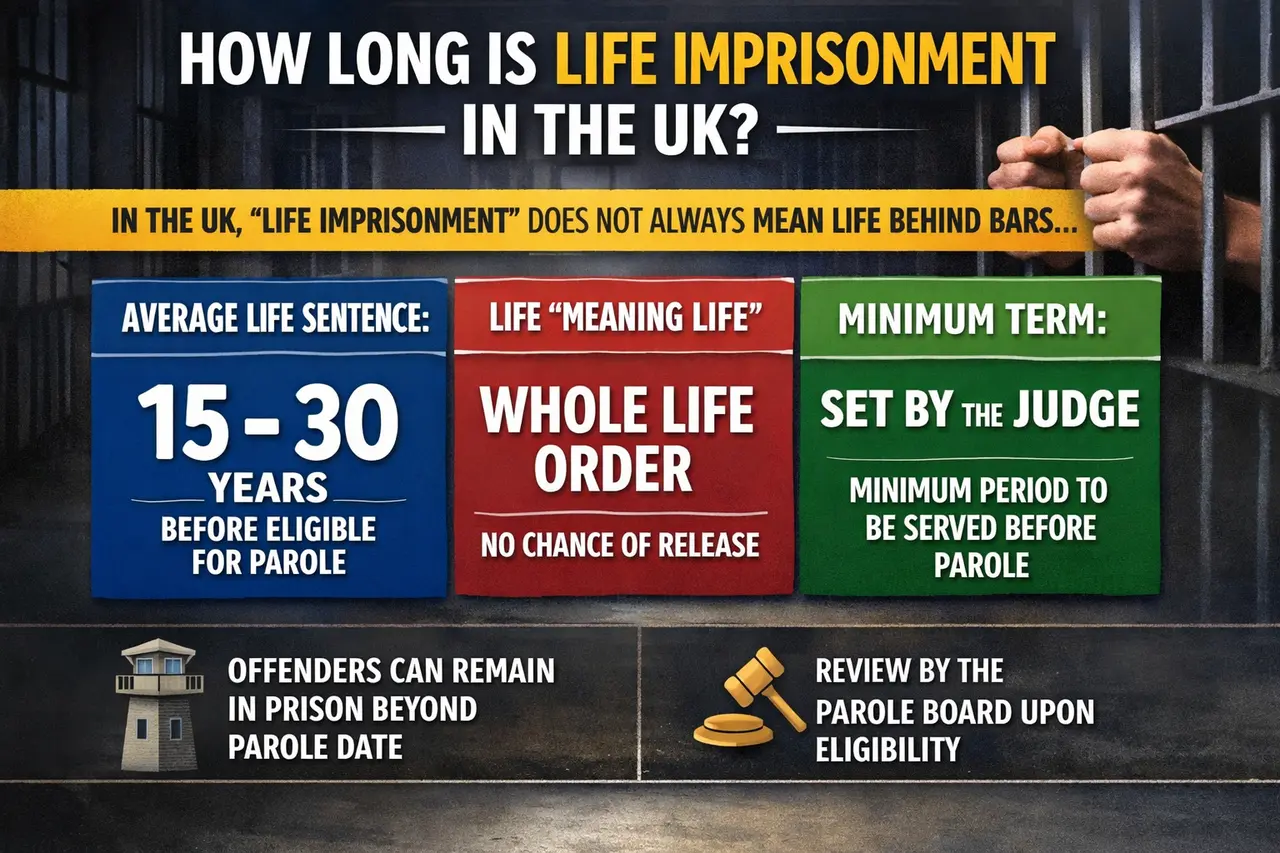
The question how long is life imprisonment in UK continues to attract strong public interest because the phrase “life sentence” sounds absolute and final. In reality, UK sentencing law is more structured and nuanced. A life sentence is primarily about public protection, meaning the offender remains under legal control for life, even if they are later released from prison under strict conditions.
Understanding how long is life imprisonment in UK requires separating popular belief from legal fact. Unlike fixed-term sentences, a life sentence has no set end date. Instead, it involves a minimum term followed by possible parole and lifelong supervision. This approach reflects the UK’s attempt to balance punishment, safety, and rehabilitation.
How Long Is Life Imprisonment in UK Explained
In the United Kingdom, a life sentence legally lasts for the remainder of the offender’s life. However, this does not always mean the person will stay in prison until death. Courts usually set a minimum term, known as a tariff, which must be served before parole can even be considered.
When people ask how long is life imprisonment in UK, the most accurate answer is that it is indefinite. Even if released, the individual remains on a life licence. This means they can be recalled to prison at any time if they breach conditions or are considered a risk to the public.
Minimum Terms and the Role of Parole
The minimum term is the punishment period set by the judge and reflects the seriousness of the crime. During this time, the prisoner cannot apply for release under any circumstances. Once the minimum term has been served, the case may be reviewed by the Parole Board, but release is never automatic.
This explains why how long is life imprisonment in UK differs between cases. Some prisoners remain incarcerated long after their tariff expires because they are not considered safe. Others may be released but must follow strict rules, including reporting requirements, restrictions on movement, and ongoing monitoring.
Whole Life Orders and Life Without Parole
In the most extreme cases, UK courts can impose a whole life order. This sentence removes any possibility of parole, meaning the offender will spend the rest of their life in prison. Whole life orders are rare and reserved for crimes of exceptional severity, such as multiple murders involving extreme cruelty.
Whole life orders strongly influence how people understand how long is life imprisonment in UK. While most life sentences allow for the possibility of release, these cases demonstrate that UK law does allow permanent imprisonment when the court believes public protection demands it.
Comparing Life Imprisonment in Other Countries
Looking abroad helps place the UK system into perspective. In the United States, life imprisonment can mean life with parole or life without parole, depending on the state and offence. Life without parole is far more common than in the UK and often applied more broadly.
In Canada and Australia, life sentences usually include long minimum non-parole periods. These systems, like the UK, recognise rehabilitation but differ in how release is assessed and supervised.
Life Imprisonment in Asia and Other Regions
In countries such as India, life imprisonment can legally mean incarceration for the rest of a person’s natural life, although remission policies may apply. Courts have significant discretion, which leads to varying interpretations across cases.
In Singapore and Pakistan, life sentences are often stricter and may involve limited review mechanisms. These comparisons highlight that how long is life imprisonment in UK reflects both domestic legal values and international human rights considerations.
Why Life Sentences Differ Around the World
Life imprisonment laws differ because legal systems are shaped by culture, politics, and social priorities. Some countries prioritise deterrence and retribution, while others focus on rehabilitation and second chances. Public opinion and crime rates also influence how severe sentencing laws become.
The UK’s approach shows that how long is life imprisonment in UK is not about a specific number of years but about managing risk. The system is designed to allow release when safe while maintaining lifelong oversight, making it one of the more balanced sentencing models internationally.
Living on a Life Licence After Release
Release from prison does not end a life sentence in the UK. Individuals released on life licence remain under supervision for the rest of their lives. Conditions may include regular contact with probation officers, restrictions on travel, and limitations on personal relationships.
This lifelong control reinforces the reality behind how long is life imprisonment in UK. Even outside prison, the sentence continues indefinitely. Any serious breach of licence conditions can result in immediate recall to custody, sometimes many years after initial release.
Conclusion
So, how long is life imprisonment in UK? Legally, it lasts for life, regardless of whether the offender is released from prison. The sentence combines a minimum term, parole assessment, and lifelong supervision to prioritise public safety while allowing for rehabilitation where possible.
Understanding this structure helps dispel myths surrounding life sentences. Rather than a fixed duration, life imprisonment in the UK is a flexible but severe punishment designed to adapt to risk, responsibility, and long-term public protection.
Frequently Asked Questions
How long is life imprisonment in UK?
Life imprisonment in the UK legally lasts for the offender’s entire life.
Does a life sentence always mean prison until death?
No, many life sentences allow release after a minimum term unless a whole life order is given.
What is the minimum term in a UK life sentence?
The minimum term is the number of years set by the judge before parole can be considered.
Can someone with a life sentence be released in the UK?
Yes, release is possible after parole approval unless it is a whole life order.
What is a whole life order in the UK?
A whole life order means the prisoner will never be eligible for parole.
Who decides release for life sentence prisoners?
The Parole Board decides if a prisoner can be safely released.
Does release end a life sentence in the UK?
No, the person remains on a life licence and can be recalled to prison.
Also Read: boothby graffoe comedian