
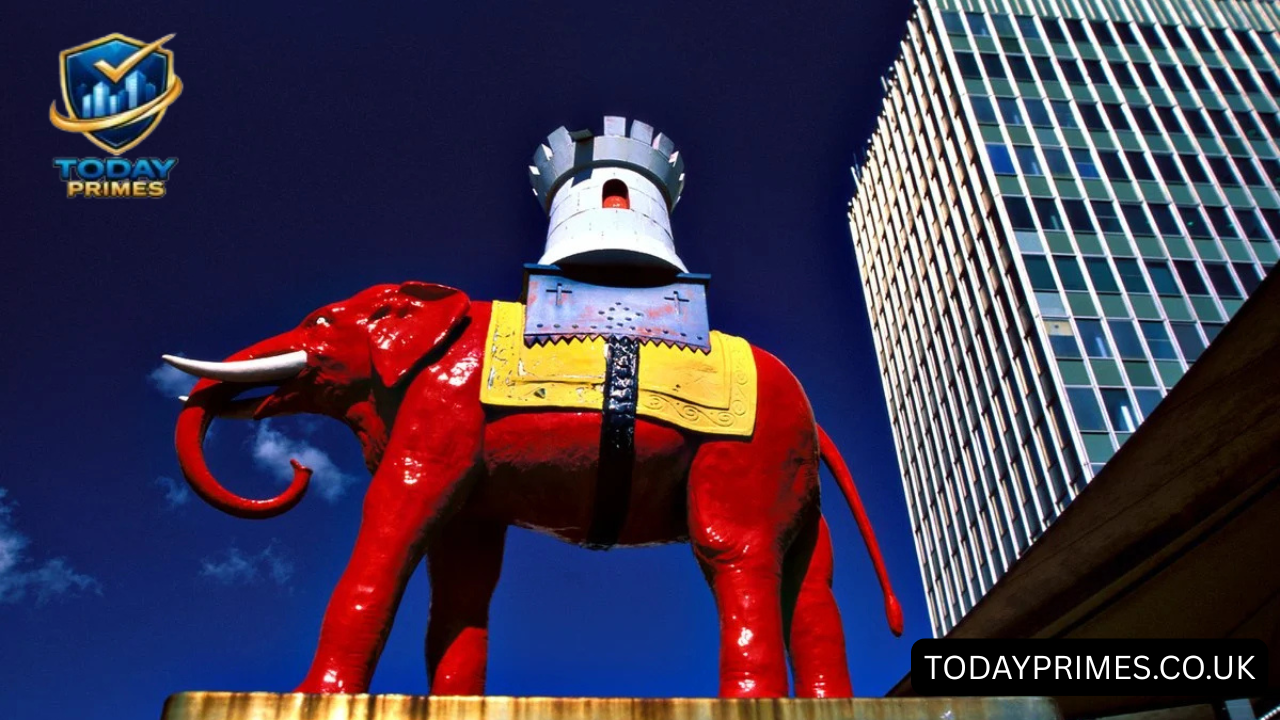
People keep typing why is it called elephant and castle because the phrase sounds more like a fairy-tale object than a London neighbourhood. Most place names in the capital point to rivers, churches, fields, or old landowners, but this one conjures an image. That immediate visual quality makes the name memorable, and it also makes people suspect there must be a story hidden underneath.
The truth is that London names often grow from everyday signposts rather than grand events. A single well-known inn, a trading symbol, or a landmark used for directions can slowly become the label for a whole area. When you ask why is it called elephant and castle, you’re really asking how a small piece of local language became official, printed on maps, stations, and street signs.
Where Elephant and Castle is in London and why it became famous
Elephant and Castle sits in South London, in the London Borough of Southwark, and it’s centred around a major road junction with strong transport connections. Over time it became a natural “meeting point” in the city, because roads and public routes funnel through the area. In London, the places that help people navigate tend to keep their names, even as buildings and skylines change.
The area’s importance also comes from how quickly it developed with traffic, trade, and movement. When a location becomes a regular reference in daily life—“get off here”, “meet there”, “turn left at that junction”—the name hardens into common speech. That is one reason why is it called elephant and castle remains such a persistent question: the name feels permanent, but its origin isn’t obvious on sight.
The coaching inn and pub-sign explanation
The strongest explanation for the name is the simplest: “Elephant and Castle” was likely an inn or tavern identified by a striking sign. Pub signs mattered in earlier centuries because they worked as visual branding in a largely non-literate society. A bold symbol—an elephant with a castle-like structure—was easy to recognise from a distance and easy to describe to travellers who needed directions.
This is why many local historians treat the inn-sign theory as the best answer to why is it called elephant and castle. A popular inn becomes a landmark, and landmarks become shorthand for the wider area around them. Over years, “near the Elephant and Castle” turns into “at Elephant and Castle”, and then into an official district name used by transport planners, businesses, and mapmakers.
The Infanta de Castilla legend and why it won’t disappear
A widely repeated alternative theory claims the name is a corruption of “Infanta de Castilla”, linked in folklore to Spanish royal connections in Tudor England. It’s an attractive idea because it turns a curious phrase into a historical romance, and it sounds plausible when spoken quickly. People love it because it feels clever, like cracking a code hidden in language.
However, when people ask why is it called elephant and castle, it’s important to separate charm from proof. The Infanta theory is disputed, and it often appears without strong documentary evidence tying it directly to the location’s naming. It is best presented as a popular story rather than a confirmed origin, especially in informative writing that aims to be accurate rather than merely entertaining.
The Cutlers’ Company symbol and London’s love of heraldry
Another layer to the story is symbolism. The elephant-and-castle motif appears in London’s heraldic traditions, most notably in the arms of the Worshipful Company of Cutlers. In that emblem, an elephant carries a castle-like howdah, which helps explain why the image feels “old London” rather than random. Symbols like this circulated through trade, signage, and cultural memory.
This matters because pub signs often borrowed recognisable symbols that people already understood. If the elephant-and-castle image was known through guild culture and trade identity, it becomes easier to see how it could be chosen for an inn sign. So, for readers still asking why is it called elephant and castle, heraldry doesn’t replace the inn explanation, but it strengthens the logic of why that specific image was used.
How the name became fixed on maps, stations, and in everyday speech
Place names become permanent when they are repeated by institutions. Once “Elephant and Castle” began appearing consistently in written form—on maps, in transport references, and in commercial descriptions—it stopped being just a local nickname. London’s growth amplifies that process: more people pass through, more signs point to it, and the name becomes a shared mental landmark across the city.
This is also why the question why is it called elephant and castle feels modern, even if the origins are older. Urban redevelopment can remove the original inn, alter the junction, and replace buildings, but the name remains because it’s embedded in transport language and local identity. In a city that constantly rebuilds itself, names often outlast the physical clues that first created them.
Why “elephant” appears in other names, from islands to science experiments
People searching why is it called elephant and castle often go on to ask about other “elephant” names, such as Elephant Island or Elephant Beach. Globally, “elephant” place names usually come from literal sightings, the shape of a landscape, or translations from local languages. In those cases, the naming logic is typically visual or ecological, rather than tied to inns and signage traditions.
“Elephant” also appears in modern phrases for dramatic effect, such as elephant toothpaste, a foaming science demonstration named for its oversized, playful spectacle. Similarly, elephant grass is a tall, robust plant associated with large grazers. These examples highlight how unusual the London case is: Elephant and Castle most likely grew from a cultural symbol used on a sign, then expanded into a district name through everyday repetition.
Conclusion on why the name stuck
The most reliable answer to why is it called elephant and castle is that the name likely began with a historic inn or pub sign and then spread outward as the junction became a recognised reference point. That explanation fits how many London places were named in the past, and it matches how names evolve when a landmark becomes central to travel, trade, and daily directions.
At the same time, the name’s endurance comes from London’s habit of keeping useful labels even when the cityscape changes. Legends like the Infanta de Castilla theory add colour, and heraldic symbols add context, but the core story is practical and very London: a memorable sign became a landmark, and the landmark became a place.
Frequently Asked Questions
why is it called elephant and castle?
It most likely comes from a historic inn or pub sign called “Elephant and Castle” that later named the surrounding area.
why is it called elephant and castle london?
Because the name became fixed at a major Southwark junction through long use on maps, signs, and transport.
Was there really an Elephant and Castle coaching inn?
Historical references strongly suggest an inn/sign existed and helped popularise the name locally.
Is the “Infanta de Castilla” theory true?
It’s a popular legend but is not widely accepted as proven origin evidence.
Is Elephant and Castle named after actual elephants?
No, it is linked to signage and symbolism rather than real elephants living there.
What is the Cutlers’ Company elephant-and-castle symbol?
It is a heraldic emblem showing an elephant carrying a castle-like howdah.
Why do London areas get named after pub signs?
Pub signs were memorable wayfinding markers long before street numbers and widespread literacy.
Why do other places have “elephant” in their names?
They are often named after landscape shapes, wildlife presence, or local-language meanings.
why is it called elephant toothpaste?
Because the experiment produces an exaggerated foamy reaction that looks comically “giant”.
why is it called elephant grass?
Because it is tall and coarse and is commonly associated with large grazing animals.
Also Read Why is it called Elephant and Castle